
Home / Guides / Rural health care jobs: loan repayment, incentives and trade-offs
Healthcare careersRural health care jobs: loan repayment, incentives and trade-offs
Rural America faces the deepest projected shortages of nurses and physicians, and federal programs repay up to $100,000 of student loans for people who go. Here is how rural is defined, what each program paid in 2026, and the honest trade-offs to weigh before you move.
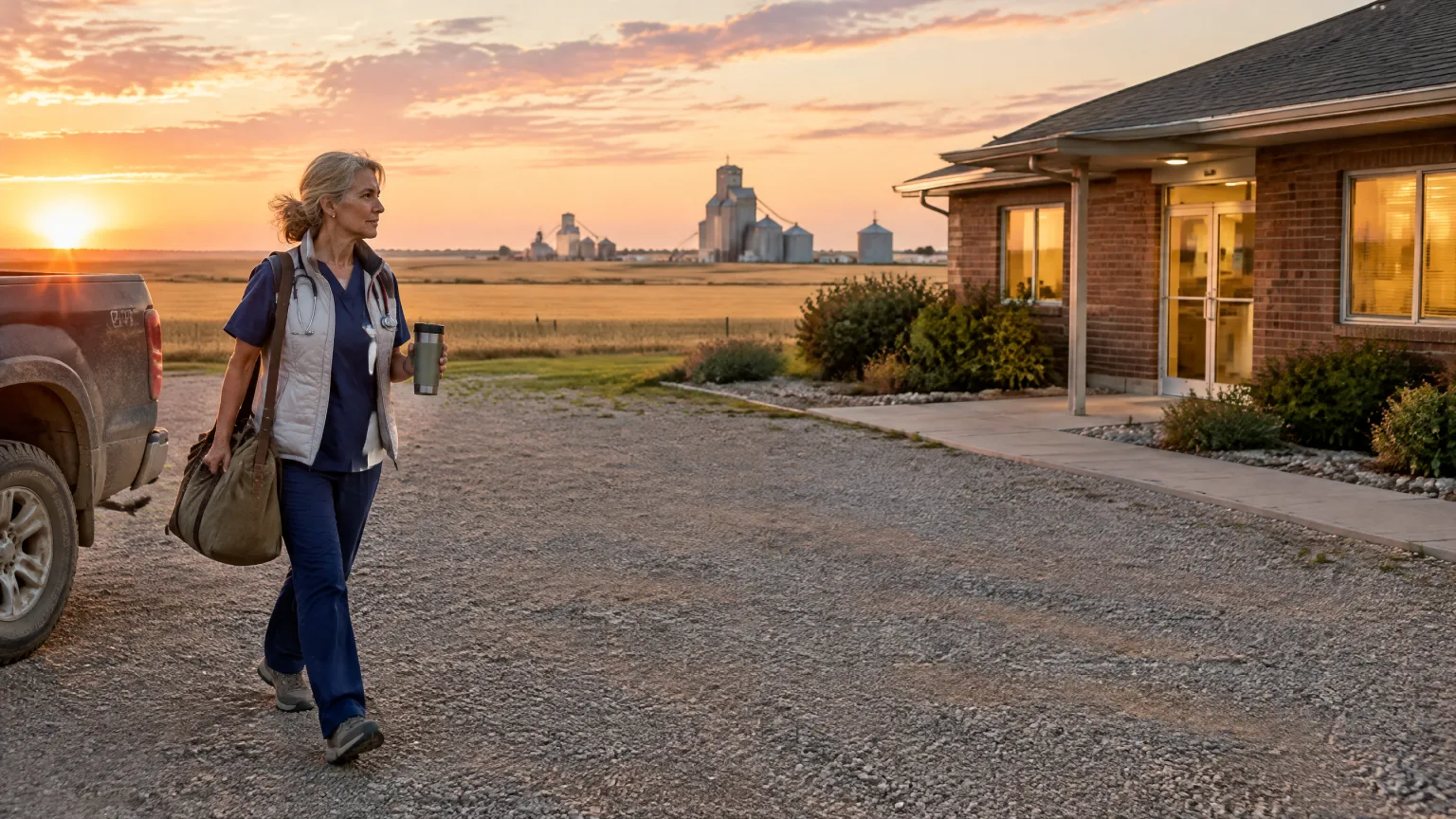
HRSA projects much deeper shortages of nurses and physicians outside metropolitan areas than inside them, including a 58 percent nonmetropolitan physician shortage in 2038 against 5 percent in metropolitan areas, and the federal government pays real money to people who take on rural work. Loan repayment programs run by the Health Resources and Services Administration can clear tens of thousands of dollars of student debt in exchange for two or three years in a shortage area, and rural employers often add sign-on bonuses, housing help and a faster route to responsibility.
This guide is for nurses, nurse practitioners, physician assistants, behavioral health clinicians and allied staff weighing a rural job. It explains how "rural" and "shortage area" are defined, which programs paid what in their 2026 cycles, how to find eligible employers, and the trade-offs that decide whether a rural post works out, which are rarely about the money.
What counts as rural?
There is no single federal definition. The Census Bureau defines urban areas and treats everything else as rural, which after the 2020 Census covered 20 percent of the population and 97 percent of the land. The Office of Management and Budget classifies counties as metropolitan or not, and non-metropolitan counties held 46.0 million people, about 13.7 percent of the population.
For health programs, the definition that usually matters is the one used by HRSA’s Federal Office of Rural Health Policy. It counts all non-metropolitan counties as rural, plus certain census tracts inside metropolitan counties that are remote, sparsely populated or reached over rugged roads. On that basis, 19.3 percent of the population, 64.5 million people, and 87.7 percent of the land area are rural. HRSA’s Rural Health Grants Eligibility Analyzer shows whether a specific address is rural under this definition.
How big is the rural shortage?
HRSA’s National Center for Health Workforce Analysis published projections for 2023 to 2038 in December 2025. Nationally, it projects shortages of 108,960 full-time equivalent registered nurses and 245,950 licensed practical nurses in 2038. The gap is much wider outside cities: a projected registered nurse shortage of 11 percent in nonmetropolitan areas against 2 percent in metropolitan areas.
For physicians the difference is starker. HRSA projects a 58 percent shortage of physicians in nonmetropolitan areas in 2038, compared with 5 percent in metropolitan areas, and a 39 percent nonmetropolitan shortage of primary care physicians. It projects nonmetropolitan shortages of 46 percent for OB-GYNs and 46 percent for dentists.
Projections are models, not forecasts of vacancies at a particular employer, and earlier HRSA releases used different years and produced different figures, so do not mix numbers from different vintages. The direction, though, has been consistent: rural employers struggle most to fill clinical posts, which gives a qualified candidate unusual leverage and, once hired, an unusually broad workload.
Who hires health workers in rural areas?
- Critical Access Hospitals. Medicare’s designation for small, isolated hospitals: no more than 25 inpatient beds, an average acute stay of 96 hours or less, 24-hour emergency care seven days a week, and generally more than 35 miles from the nearest hospital, or 15 miles in mountainous terrain or where only secondary roads connect them.
- Rural Health Clinics. Outpatient clinics in rural shortage areas. CMS requires a nurse practitioner, physician assistant or certified nurse-midwife to be available to see patients at least 50 percent of the time the clinic is open, which is why these clinics are steady employers of advanced practice clinicians.
- Community health centers, also called Federally Qualified Health Centers, which are automatically designated shortage facilities and are among the most common sites for loan repayment.
- Indian Health Service, tribal and urban Indian health programs, which are also automatically designated.
- The Veterans Health Administration. VA’s Office of Rural Health reports that 3 million of the 9.1 million veterans enrolled for VA care in fiscal 2025 lived in rural or highly rural areas, and that rural veterans enroll at a higher rate than urban ones, 66 percent against 47 percent.
- State prisons and other correctional facilities, public health departments, nursing homes, home health agencies and behavioral health providers.
Rural hospitals also close. The Sheps Center for Health Services Research at the University of North Carolina counts 197 rural hospital closures and conversions since January 2005: 109 complete closures and 88 converted closures, where a facility stopped inpatient care but kept other services. It tracks conversions to the newer Rural Emergency Hospital designation separately. That designation took effect on January 1, 2023, and an REH keeps emergency and outpatient services but cannot have inpatient beds, apart from a distinct skilled nursing unit; the Sheps Center listed 55 in operation when we checked in September 2026. For a job seeker, a conversion means inpatient nursing posts go even if the building stays open, so a rural hospital’s finances and plans are worth checking before you move your household for it.
Which loan repayment programs pay for rural work?
The figures below are from each program’s 2026 cycle, all of which had closed by September 2026. Amounts and rules can change from year to year, so check the new guidance when the next cycle opens.
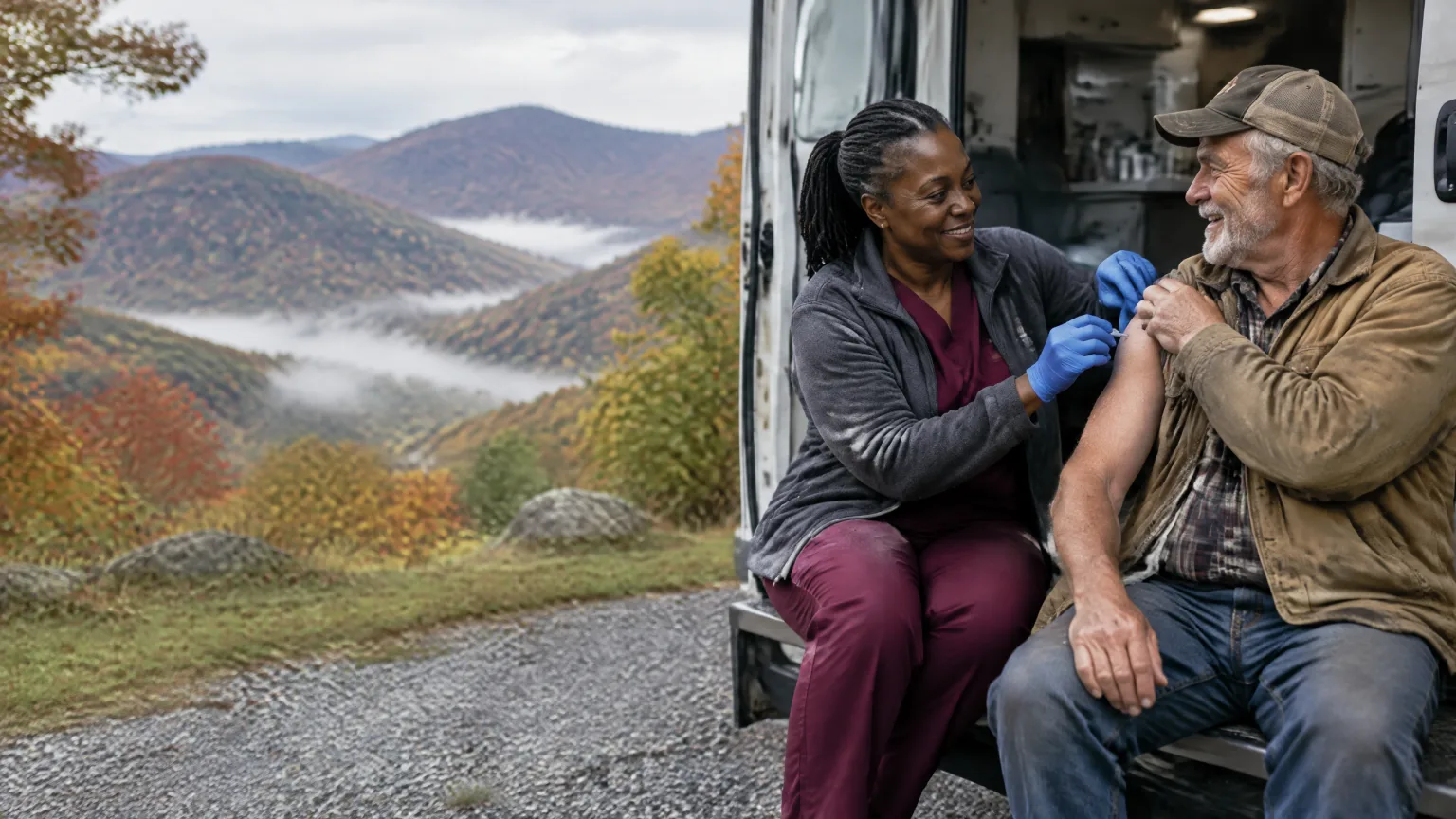
- National Health Service Corps Loan Repayment Program. Two years at an NHSC-approved site in a HPSA. Physicians, nurse practitioners, certified nurse-midwives and physician assistants providing primary care in a primary care HPSA could receive up to $75,000 for two years full time, or $37,500 half time; other eligible clinicians, including behavioral health and dental providers, up to $50,000 full time or $25,000 half time. A further $5,000 was available for assessed Spanish-language proficiency. Awards are exempt from federal income and employment taxes. Applicants must be US citizens or nationals. Registered nurses are not an eligible discipline for this particular program.
- NHSC Rural Community Loan Repayment Program. Three years at a rural NHSC-approved substance use disorder treatment facility, for up to $100,000 full time or $50,000 half time. The eligible disciplines are broader and include registered nurses, pharmacists, substance use disorder counselors and certified registered nurse anesthetists. Eligible sites range from opioid treatment programs and Rural Health Clinics to Critical Access Hospitals affiliated with an outpatient clinic, health departments, correctional facilities and mobile units.
- Nurse Corps Loan Repayment Program. For registered nurses, advanced practice registered nurses and nurse faculty. It pays 60 percent of your outstanding qualifying nursing education loans over two years of full-time work at a Critical Shortage Facility, meaning a public or private facility located in, designated as, or serving a HPSA, with a possible third year paying a further 25 percent. HRSA gives preference to applicants with the greatest financial need.
- State Loan Repayment Programs. HRSA funds states and territories to run their own programs for primary care, behavioral health and dental clinicians, so the amounts, eligible professions and service terms vary by state. Your state’s Primary Care Office or health department can tell you what is offered.
- Indian Health Service Loan Repayment Program. Up to $50,000 for an initial two-year commitment in facilities serving American Indian and Alaska Native communities.
The 2025 budget law adds a newer source of money. Its Rural Health Transformation Program provides $50 billion to the 50 states over fiscal 2026 to 2030, $10 billion a year, and one of the permitted uses is recruiting and retaining clinical staff in rural areas, with commitments to serve for at least five years. In September 2026, CMS announced state projects including $4.8 million to strengthen West Virginia’s rural health care workforce and $5.48 million for health care career programs in Rhode Island schools. Ask a prospective employer, or your state health department, whether any state program funded this way applies to the post.
How do you find a job that qualifies?
Work backward from the program, not forward from a job ad. The programs pay only for service at an approved site, and for NHSC you must already be working at, or have accepted a job at, an approved site by the application deadline.
- Use HRSA’s Health Workforce Connector to find sites approved for NHSC, Nurse Corps and other HRSA loan repayment programs, along with their shortage area scores. Higher scores generally mean higher priority for awards.
- Use HPSA Find on data.hrsa.gov to see whether an area or facility is designated, and the Rural Health Grants Eligibility Analyzer to see whether an address is rural.
- Register with 3RNET, the National Rural Recruitment and Retention Network, a nonprofit funded by the Federal Office of Rural Health Policy and member dues. Job seekers can register, and it has a network coordinator in each state. Its executive director told the Rural Health Information Hub that it places more than 2,000 medical professionals a year, 90 percent of them in designated shortage areas.
- Contact your state’s Primary Care Office, which handles shortage designations and often knows which sites are recruiting and what state loan repayment is available.
- Ask every employer directly whether the site is NHSC-approved or a Nurse Corps Critical Shortage Facility, and get the answer in writing before you rely on it.
What are the honest trade-offs?
The Rural Health Information Hub, a HRSA-funded clearinghouse, lists the concerns clinicians most often raise about rural practice: a heavy workload with patients who may need more specialized care, difficulty taking time off, frequent call, professional isolation and the challenge of keeping professional boundaries in a small community where you will meet your patients at the grocery store. Families raise their own: limited jobs for a spouse, long distances to school, scarce child care and after-school programs, and a shortage of suitable housing.
The same source lists the rewards that keep people there: a stronger sense of mission, closer relationships with patients, greater autonomy, earlier opportunities for leadership and teaching, loan repayment, and a slower pace of life with easier access to the outdoors. In practice the job is also broader. A nurse at a small hospital may cover the emergency room, inpatient beds and long-term swing-bed patients in the same shift, which builds skills fast but leaves less room to specialize.
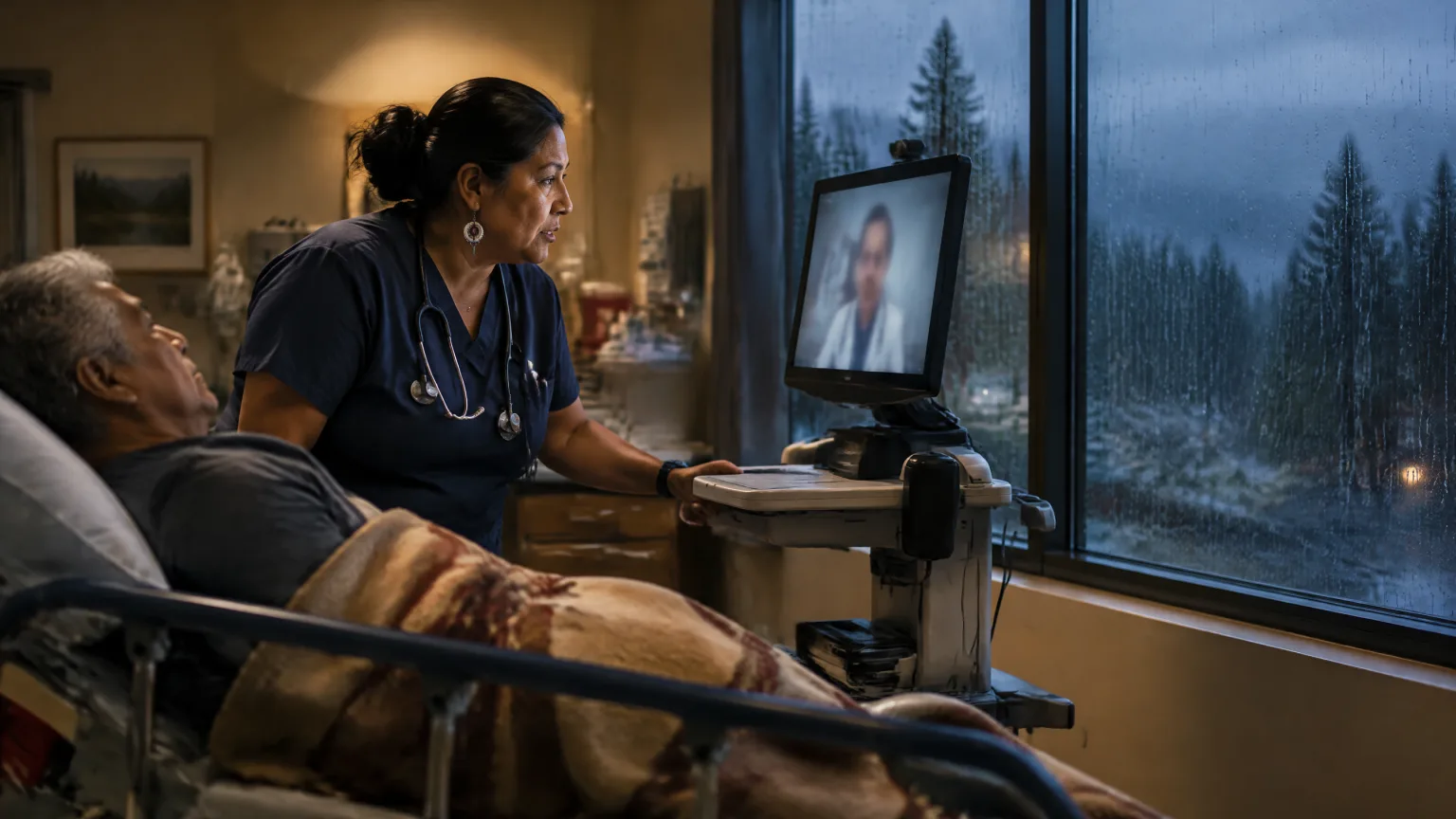
Technology has narrowed the isolation. RHIhub points to examples such as an electronic ICU system that lets rural clinicians in Alaska work with intensive care staff in Anchorage, and Project ECHO, which connects rural primary care teams with academic specialists. Ask whether the employer uses anything similar, because backup at 3 a.m. matters more than any bonus.
A worked example: what loan repayment could be worth
Suppose, as an illustration, a family nurse practitioner has $120,000 of qualifying student loans and an offer from a Rural Health Clinic in a primary care HPSA that is also an NHSC-approved site. Under the 2026 rules, a successful full-time NHSC application would pay up to $75,000 over two years, exempt from federal income tax, and after that the practitioner could apply for one-year continuation contracts toward the remaining balance, which are not guaranteed.
Now suppose a registered nurse with $40,000 of qualifying nursing loans takes a full-time job at a Critical Shortage Facility and wins a Nurse Corps award. Sixty percent of $40,000 is $24,000 over two years, and an optional third year would add 25 percent, another $10,000. Because Nurse Corps awards are taxable, the nurse would owe income tax on those payments.
Neither award is automatic. Both programs are competitive, funding priorities favor higher-need sites and, for Nurse Corps, applicants with greater financial need, and leaving early carries penalties set out in the contract. Compare offers on salary and benefits first, and treat loan repayment as a bonus you might win rather than money you already have.
What should you ask a rural employer?
- Is this site NHSC-approved, a Nurse Corps Critical Shortage Facility, or eligible for the state loan repayment program, and what is its shortage area score?
- What does the call schedule look like, and who is my backup when I am the only clinician on site?
- Which patients are transferred out, how far, and how long does a transfer usually take?
- Does the organization help with housing, relocation, licensing costs or finding work for a spouse?
- How many people have held this post in the past five years, and why did they leave?
- Is the hospital financially stable, and are there any plans to close inpatient beds, obstetrics or other services?
- Is the employer receiving any state recruitment or workforce funding, and does it come with a service commitment?
Can a registered nurse get National Health Service Corps loan repayment?
Not through the main NHSC Loan Repayment Program, whose eligible disciplines are physicians, nurse practitioners, certified nurse-midwives, physician assistants, dental and behavioral health professionals. Registered nurses are eligible for the NHSC Rural Community program, which requires three years at a rural substance use disorder treatment facility, and the Nurse Corps Loan Repayment Program is built for them.
When do the loan repayment programs take applications?
In 2026 the NHSC programs accepted applications from January 30 to March 31 and promised decisions by September 30, and the Nurse Corps program also notified applicants by September 30, 2026. Dates for the next cycles had not been published for the NHSC and Nurse Corps programs when this guide was checked; the IHS program’s FY2027 cycle opens October 1, 2026. HRSA’s email updates announce them.
Does rural work pay less?
It depends on the role and the place. Some rural employers pay less than the nearest city; others pay more, or add bonuses, to fill hard posts. Compare published pay for the specific state and role, and add in the value of any loan repayment and the lower cost of housing, rather than assuming either way.
Is a rural job a good first job for a new graduate?
It can be, if the employer offers real orientation and backup. The breadth of rural work builds skills quickly, but a new nurse alone on a night shift with limited support is a risk to patients and to you. Ask specifically about orientation length, preceptors and who is on call, and look for rural sites that run structured residency programs.
Sources
- How We Define Rural — HRSA Federal Office of Rural Health Policy. Retrieved 13 September 2026.
- Health Workforce Projections (2023–2038 projections, released December 2025) — HRSA National Center for Health Workforce Analysis. Retrieved 13 September 2026.
- What Is Shortage Designation? — HRSA Bureau of Health Workforce. Retrieved 13 September 2026.
- NHSC Loan Repayment Program — National Health Service Corps, HRSA. Retrieved 13 September 2026.
- NHSC Rural Community Loan Repayment Program — National Health Service Corps, HRSA. Retrieved 13 September 2026.
- Apply to the Nurse Corps Loan Repayment Program — HRSA Bureau of Health Workforce. Retrieved 13 September 2026.
- State Loan Repayment Program (SLRP) — National Health Service Corps, HRSA. Retrieved 13 September 2026.
- IHS Loan Repayment Program — Indian Health Service. Retrieved 13 September 2026.
- Critical Access Hospitals — Centers for Medicare & Medicaid Services. Retrieved 13 September 2026.
- Rural Health Clinics — Centers for Medicare & Medicaid Services. Retrieved 13 September 2026.
- Rural Health Transformation Program — Centers for Medicare & Medicaid Services (Medicaid.gov). Retrieved 13 September 2026.
- Rural Hospital Closures — Cecil G. Sheps Center for Health Services Research, University of North Carolina. Retrieved 13 September 2026.
- About Rural Veterans — VHA Office of Rural Health, U.S. Department of Veterans Affairs. Retrieved 13 September 2026.
- Rural Emergency Hospitals — Rural Health Information Hub. Retrieved 13 September 2026.
- Rural Emergency Hospitals — Cecil G. Sheps Center for Health Services Research, University of North Carolina. Retrieved 13 September 2026.
- Recruitment and Retention for Rural Health Facilities (last updated August 10, 2026) — Rural Health Information Hub. Retrieved 13 September 2026.
Last reviewed Sep 13, 2026. First published Oct 26, 2026. Federal hiring rules change — confirm anything you act on against the agency's own announcement or OPM guidance.
More on healthcare careers

New grad nurse in a tight market: residency programs that hire
Hospitals are short of experienced nurses, not beginners, so new graduates compete for a limited number of residency seats. How accredited residencies work, how VA’s paid post-baccalaureate residency differs, and a step-by-step plan for finding programs that hire.
Travel nursing in 2026: the real pay math against a staff job
A travel contract’s weekly figure is mostly non-taxable stipends that only work if you keep a genuine tax home. A worked comparison using GSA per diem rates and BLS pay data, the IRS rules that decide the math, and VA’s in-house travel corps.

Internationally educated nurses in 2026: visas, fees and the backlog
Most internationally educated nurses reach the US on an employer-sponsored EB-3 green card, not an H-1B. The steps in order, the fees USCIS publishes, the October 2026 Visa Bulletin dates, and the 2025–26 policy changes still in court.

Health care jobs you can start without a degree, and how to get in
Many hospital, VA and county health jobs need a certificate or a few months of training rather than a degree. Current federal pay and outlook figures for ten roles, the training each one needs, how federal rules credit experience, and how to get training paid for.